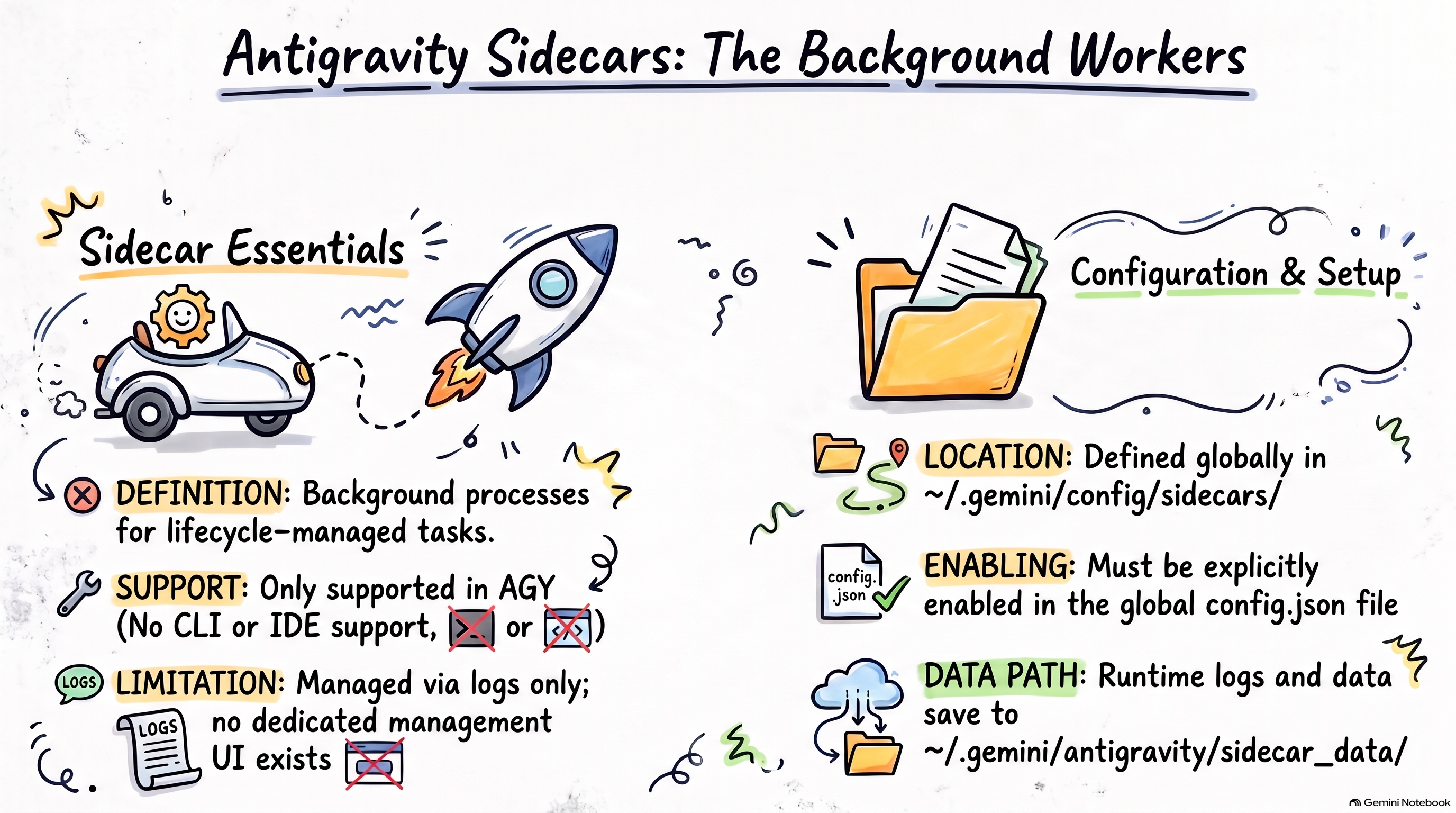
Where does Antigravity look for Hooks?

Antigravity Hooks
Antigravity Hooks

💡 This post is part of a series on Antigravity configuration:

In today’s post, I’ll talk about Hooks in Antigravity, what they are, how to configure them, and some shortcomings.

Hooks

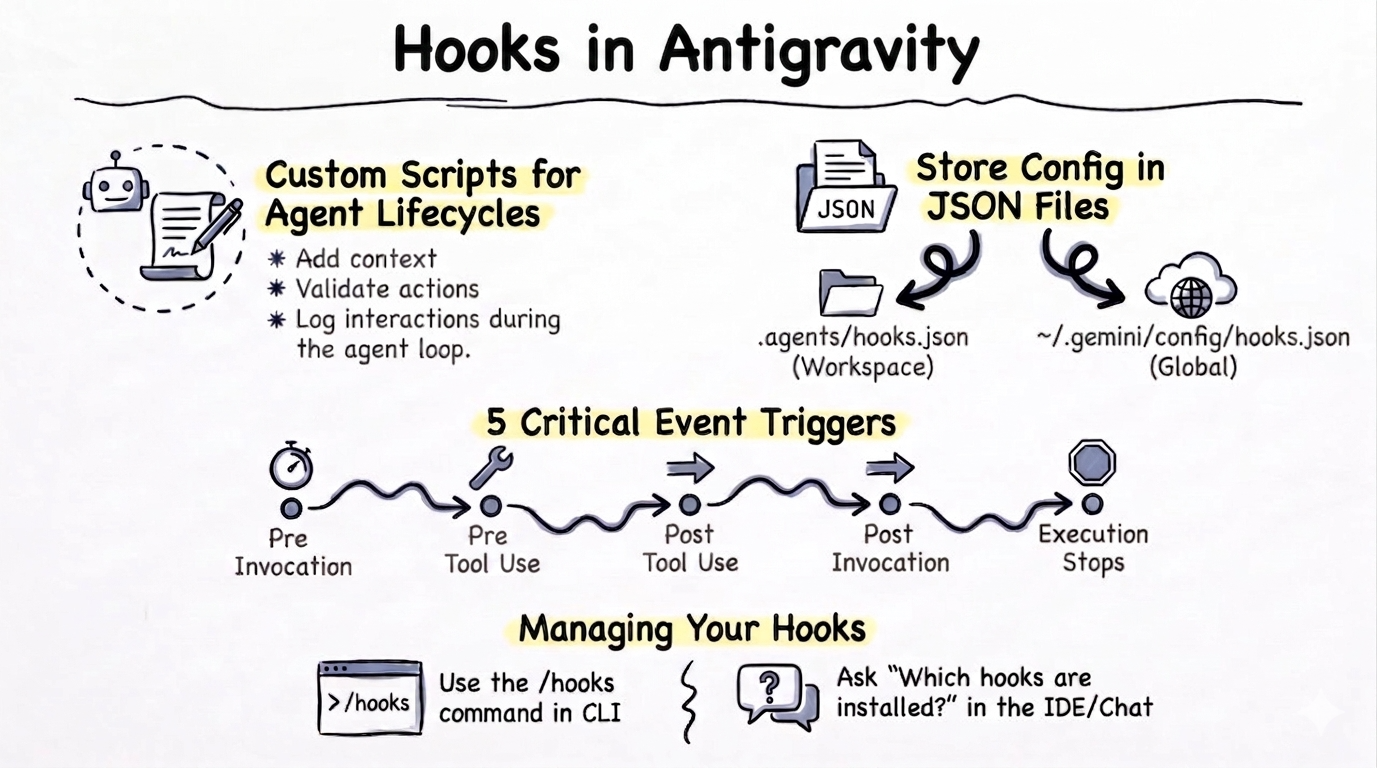
Hooks allow you to run custom scripts or programs at specific points in the Antigravity agent lifecycle, such as before or after model or tool calls. They are a way to extend the functionality of the agent. Hooks run synchronously as part of the agent loop and they can be useful for things like adding context, validating actions, enforce policies or logging interactions.

Read More →

Where does Antigravity look for Rules and Workflows?

Antigravity Rules and Workflows

💡 This post is part of a series on Antigravity configuration:

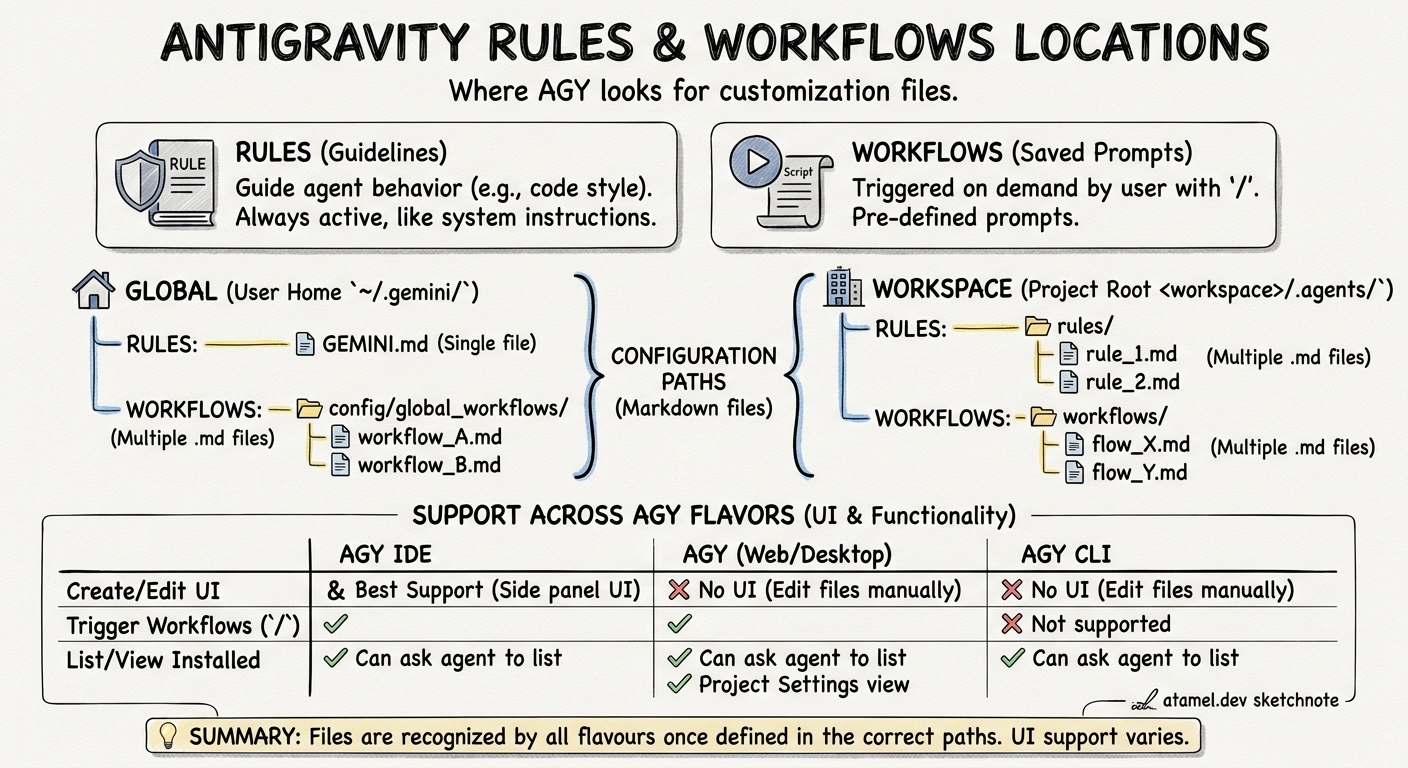
I’ve been exploring different ways of customizing Antigravity and where it saves its various configuration files. For Agent Skills, see Where does Antigravity look for Agent Skills? and for MCP Servers, see Where does Antigravity look for MCP Servers?.

Read More →

Where does Antigravity look for MCP Servers?

Antigravity MCP
Antigravity MCP

💡 This post is part of a series on Antigravity configuration:

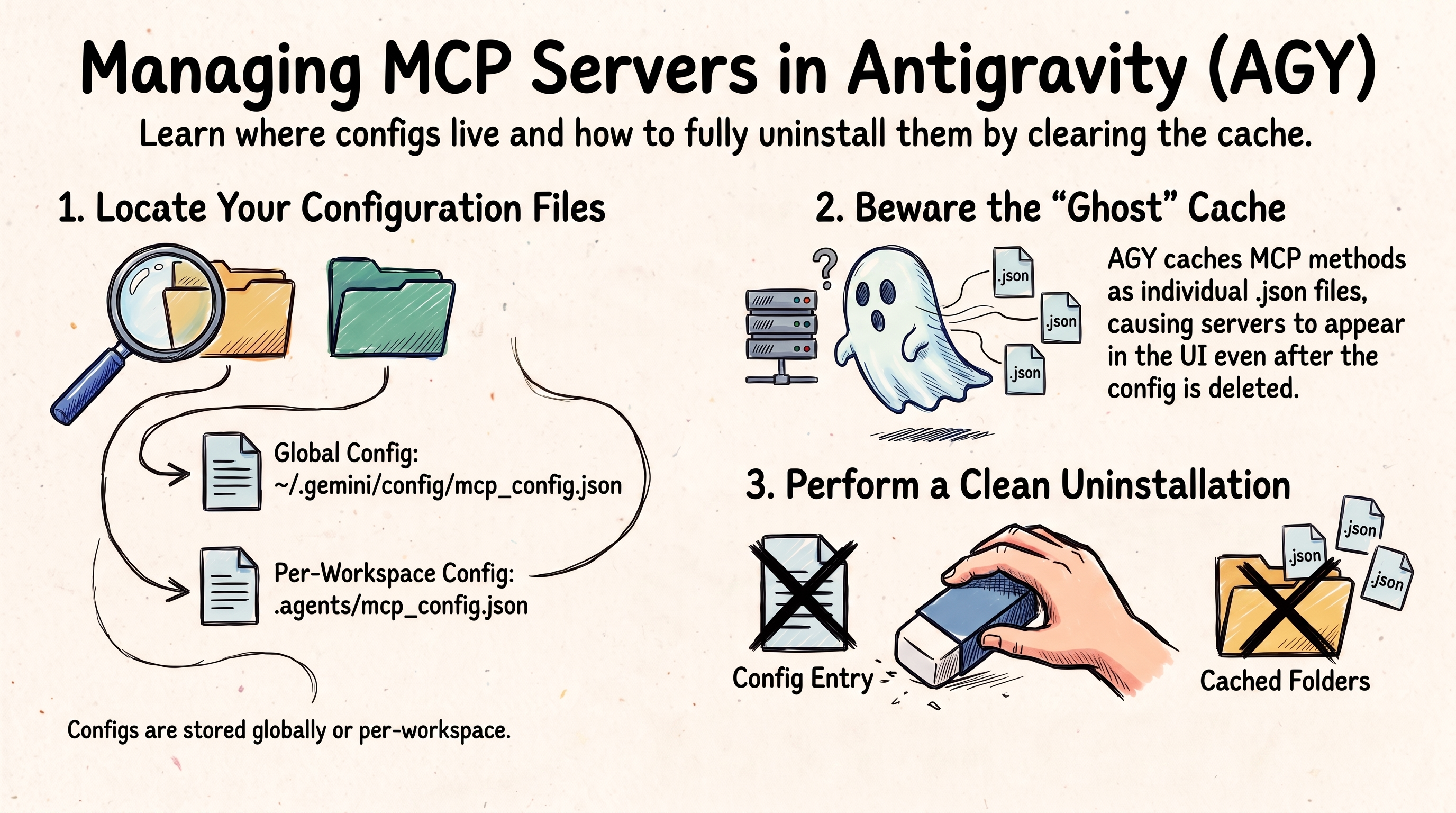
In my previous post, I explored where Antigravity (AGY) looks for agent skills. In this post, I’ll briefly explore the same for Model Context Protocol (MCP) servers and mention the MCP server caching that’s worth knowing about.

Read More →

Where does Antigravity look for Agent Skills?

Antigravity Skills
Antigravity Skills

💡 This post is part of a series on Antigravity configuration:

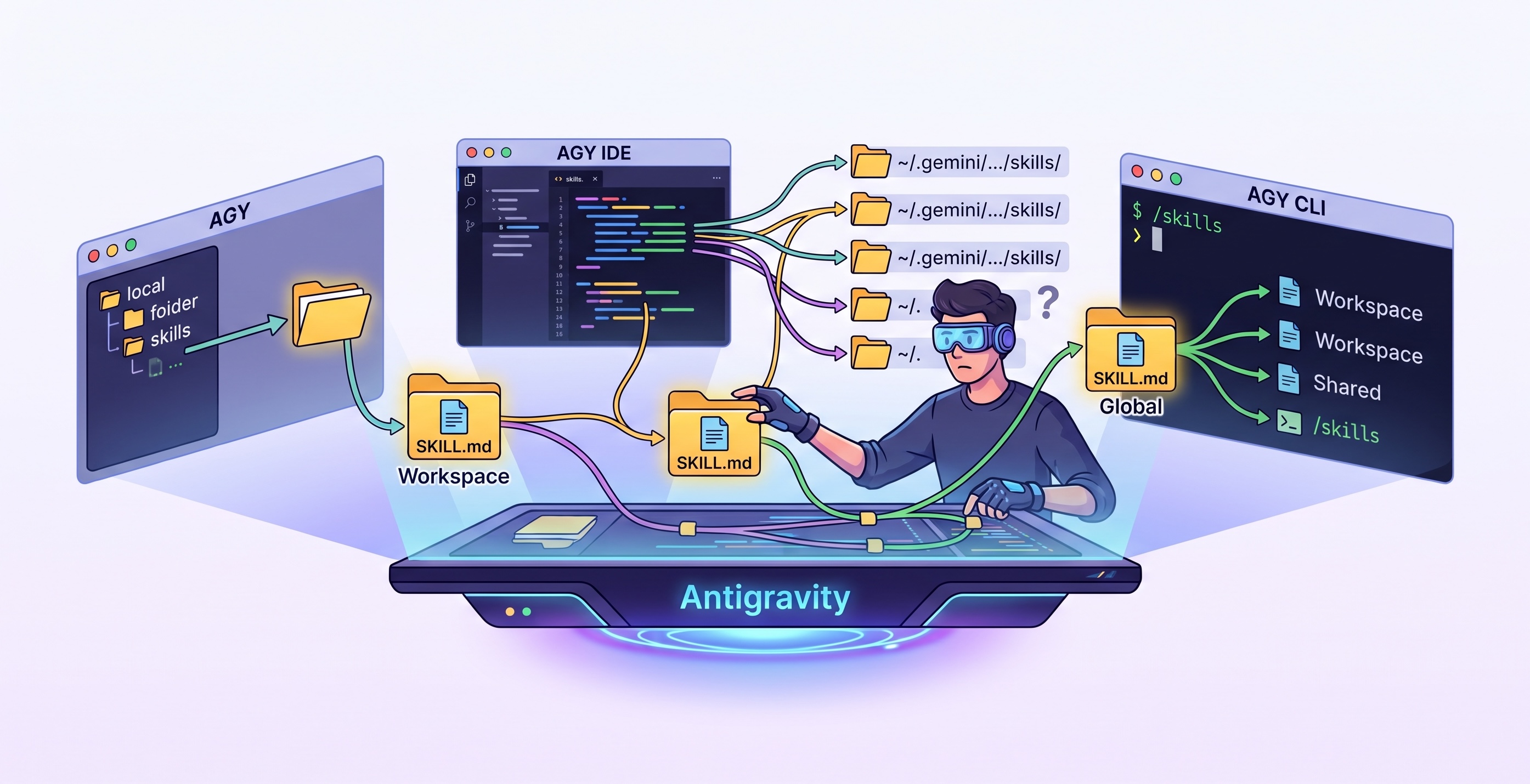
Skills are an open standard for extending agent capabilities. A skill is a folder containing a SKILL.md file with instructions that the agent can follow when working on specific tasks.

Read More →